What 13 minutes in Nepal can teach us about acting before disaster strikes
9 September 2026
This story was originally published by The New Humanitarian.
By Jessica Alexander
Rajendra Dawadi had to make a decision in an instant. Warned that floodwaters were racing towards his school in Nepal’s Trishuli Valley, the headmaster had no way of knowing how much time he had, nor whether the floodwaters would reach his school. He did not hesitate and evacuated more than 900 students and 16 staff to higher ground.
Approximately 13 minutes later, a wall of water, mud, and debris swept through the area, destroying the school.
Dawadi acted before he knew for certain what was coming. His calculation was simple. If the warning proved wrong, his students would miss a day of school. If it was right and he did nothing, hundreds of children could die.
The instinct to act while there is still time, despite uncertainty, is at the heart of anticipatory action. Investing ahead of known risks has been shown to save lives and reduce losses. But acting ahead requires accepting that some forecasts will never provide complete certainty, and that waiting to act can carry far higher consequences.
Nepal shows what formal systems can and cannot do
Nepal is hardly a newcomer to acting ahead of disasters. The Department of Hydrology and Meteorology introduced the flood early warning system in the 1990s, combining both high-tech river level monitoring stations with simpler community-based systems for detecting rising waters and disseminating warnings.
In 2022, the government held the first national dialogue on anticipatory action, and this year endorsed a national policy. Humanitarian organisations have been experimenting with anticipatory approaches for more than a decade, releasing pre-arranged emergency funding at least twice for flood response.
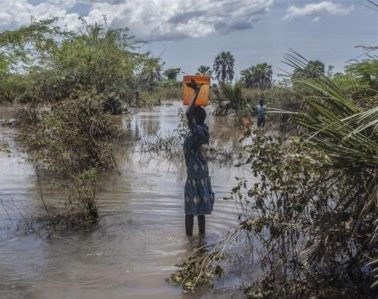
The August disaster, however, fell outside of the mainly weather-related monsoon flooding that these mechanisms were designed to anticipate and warn against. A huge section of glacier and surrounding bedrock collapsed high in Tibet, sending ice, rock, and debris into the river system and generating a catastrophic flood that travelled nearly 100 kilometres downstream. Automatic monitoring stations along the upper Bhotekoshi River were meant to detect rising water and alert communities downstream, but the flood moved so quickly that monitoring stations inside Nepal were destroyed before they could transmit a warning. The community-level river gauges that gradually measured river behaviour were also too slow for a flood travelling at an average speed of 193 kilometres per hour.
Some of these limitations were already understood. A 2023 review of Nepal’s anticipatory action experience raised concerns about the reliability of forecasts and called for greater flexibility to combine scientific triggers with human judgement and changing conditions on the ground. A later study in 2025 found their early warning messaging system frequently did not prompt the necessary actions to save lives and protect assets.
What happened at Dawadi’s school shows why this matters. The warning that saved Dawadi’s students did not come through the formal monitoring or early warning system. A relative upstream called the school accountant. Teachers received calls from family and friends. A parent arrived to collect her child. Dawadi ordered the evacuation. Teachers, parents, and others then helped get the children uphill. Many others were not so fortunate. Elsewhere along the flood’s path, people had almost no time to react.
Forecasting and early warning technology remain essential, but they have to be matched by readiness at the community level – evacuation plans, trusted communication networks, prepared local institutions and people able to act when information arrives.
Those community connections are part of the infrastructure of disaster readiness. I saw their importance when I lived in Japan and studied how the country prepares for disasters in 2019. Japan is famous for its enormous investment in seawalls, flood defences, earthquake-resistant buildings and sophisticated warning systems. But some of its most important investments are far simpler.
Children learn about disaster risk from kindergarten. Communities practise evacuations. Families are encouraged to have a go-bag ready at all times. Residents identify neighbours who may need help. Survivors share their experiences with communities facing similar hazards.
Japan also shows the limits of relying too heavily on infrastructure and more formal warning systems. During severe 2018 flooding in Mabi, a district in western Japan situated near two rivers, embankments were overwhelmed and mobile-phone warnings failed to reach some of the elderly people most at risk. Research after the Mabi flood and the 2011 Great East Japan Earthquake and Tsunami found that some residents delayed evacuating because they believed physical defences would protect them.
Forecasting and early warning technology remain essential, but they have to be matched by readiness at the community level – evacuation plans, trusted communication networks, prepared local institutions and people able to act when information arrives. These investments may be less visible than satellites, monitoring stations or dams, but they can determine whether a warning actually saves a life.
Schools are an important part of that community readiness. My research on education and anticipatory action with the Geneva Global Hub for Education in Emergencies in 2025* found much the same thing that Dawadi’s experience demonstrates: Schools can play a critical role in turning early warnings into action. They reach children and families every day, while teachers are often trusted community leaders who can communicate risks, organise evacuations, and connect formal warning systems with local knowledge. Disaster education also gives children knowledge they take home and carry into adulthood, strengthening the ability of entire communities to respond to future crises.
Governments, donors, and aid agencies must become more comfortable spending money before they can be certain a crisis will unfold as forecast.
Scientists are still grappling with how to predict rock-ice avalanches like the one in Nepal. But as glacial flooding increases as a result of global warming, they warn that these events are expected to be more common around the world. Anticipatory approaches and funding will need to adapt to include these emerging risks while investing more in the local institutions and relationships that can turn warnings into action.
Yet humanitarian financing still runs overwhelmingly in the opposite direction. Ninety-nine percent of international humanitarian funding still flows after disasters happen and only about 12% of total anticipatory action funding between 2022 and 2023 involved those organisations closest to communities. In a time of collapsing budgets and hyper-prioritisation, it is urgent to rethink whether scarce resources are being deployed where – and when – they can have the greatest effect.
Some actions may prove unnecessary. Sometimes, supplies will be moved for a flood that changes course. Cash may be released ahead of a drought that proves less severe than expected. Schools may close for storms that never arrive. That does not make those decisions bad ones. Governments, donors, and aid agencies must become more comfortable spending money before they can be certain a crisis will unfold as forecast. The cost of acting unnecessarily can be far smaller than the cost of acting too late.
Dawadi understood that tradeoff.
*This article was revised on 10 September 2026 to show that the research was published in 2025, rather than 2024 as originally stated.
–––––
The New Humanitarian puts quality, independent journalism at the service of the millions of people affected by humanitarian crises around the world. Find out more at www.thenewhumanitarian.org.
(async () => {
const article = document.querySelector('.syndication-article__content-toggle');
const nid = article.dataset.nid;
const lang = article.dataset.lang;
if (nid && lang) {
fetch(`https://thenewhumanitarian.org/external_tracking/${lang}/${nid}/none`, { mode: 'no-cors' });
}
})();